| . |
Commentary 31924
Part 1: OVERALL INFLATION RATE
August, 2019 Data:
The forecast for the US Inflation Rate is in the table at the top of this page.
Forecast-Chart.com is forecasting that US Inflation Rates will be roughly 2.79%
over the next year. The table shows a HDTFA of 1.10% which suggests that US
inflation for the 12 months ending September, 2020 could easily fall between
3.89% and 1.70%. Links to Forecasts for many other economic indicators may
be found by clicking the Economic Forecast link at the top of this page.
Annual Inflation Rates
Last Month -0.1%
Last Year . . . . . . . . . . . . . . . . . . . . 1.7%
Last 5 Years 1.5%
Last 10 Years . . . . . . . . . . . . . . . . . 1.7%
Last 20 Years 2.2%
Annual Inflation Rate: Highs & Lows
High (Last 12 Months) 2.5% (October, 2018)
Low (Last 12 Months) 1.5% (February, 2019)
High (Since January, 1922) 19.7% (March, 1947)
Low (Since January, 1922) -11.1% (January, 1922)
The annual US Inflation Rate for the 12 months ended in August, 2019 was
1.75%. That's 0.06% percent lower than the 12 months ended in July, 2019
which inflated at a rate of 1.81%. It is 0.95% percent lower than the 12 months
ended in August, 2018 which inflated at a rate of 2.70%. The fall in inflation
rates from July to August indicates that the short term inflation trend has been
down. If that trend continues, we should see an inflation rate for the 12 months
ended in September, 2019 that is close to 1.69%.
The US Inflation Rate one year ago was 2.70%. Over the last year it was 1.75%.
The average rate over the last 10 years was 1.73%. Higher inflation over the
last 12 months compared to the average inflation over the last 10 years serves
as an indicator that the long term trend in the US Inflation Rate is up. Inflation
expectations should be adjusted accordingly.
Forecast-Chart.com's historical research covers US Inflation Rate data back to
January, 1922. The average annual inflation rate during that period of history
was 3.10%. The highest rate was 19.67%. The lowest rate was -11.05%. The
high was attained in the 12 months ended in March of 1947. The low was
achieved in the 12 months ended in January of 1922. Recent rates experienced
in the 12 months ended in August of 2019 are low relative to the historical
3.10% average.
Part 2: INFLATION RATE BY CATEGORY
August, 2019 Data:
There are many types of inflation that are included in the ANNUAL US
INFLATION RATE. There's Food, Apparel, Education, Energy, Transportation,
Medical Care, Recreation and Housing Inflation. All these are included in the
overall US Inflation rate.
Prices can be rising rapidly in certain inflation categories but actually falling in
others. If you are young and healthy, you may spend more heavily on
education, apparel, recreation or transportation. Seniors spend a greater
portion of their budget on medical care.
Your inflation rate could be much higher than the overall rate!
Falling home values may result in a declining cost of housing. But not for you, if
you already own your own home! Your mortgage payments don't decline just
because the value of your home has fallen.
Housing deflation may lower the overall inflation rate. In that case, inflation for a
homeowner may be much higher than the overall inflation rate!
The key question is this: WHAT IS YOUR INFLATION RATE?
INFLATION BY CATEGORY is shown below:
ANNUAL
RATE*
1.0% Apparel Inflation
0.6% Education & Communication Inflation
-4.4% Energy Inflation
1.7% Food and Beverages Inflation
1.7% Food Inflation
2.8% Housing Inflation
3.5% Medical Care Inflation
1.2% Recreation Inflation
-1.1% Transportation Inflation
1.75%. All Items
* Annual inflation rates for the 12 months ended in August, 2019.
FORECASTS & CHARTS FOR EACH INFLATION CATEGORY may be found by
clicking the link above titled Inflation Forecasts: Food, Medical Care, Housing
etc. The link is under the inflation chart, near the top of this page.
HISTORICAL INFLATION
Historical Inflation is shown below for the various inflation categories and many
inflation subcategories as well. Two time periods are covered. Inflation over the
last ten years is shown first. Inflation over the last thirty years is shown next.
Gross rather than annual inflation is shown for the ten and thirty year historical
inflation statistics provided below. Therefore, the percent shown reflects the
governments estimates of the total change in prices for each category over the
entire time period instead of the annual rate of price change during each time
period. For example, the figures below indicate that Medical Care costs are now
232% higher than they were thirty years ago.
INFLATION OVER THE LAST 10 YEARS IS SHOWN BELOW:
6% Apparel Inflation
8% Education & Communication Inflation
6% Energy Inflation
19% Food Inflation
19% Food and Beverages Inflation
23% Housing Inflation
33% Medical Care Inflation
5% Recreation Inflation
14% Transportation Inflation
15% Alcoholic Beverage Inflation
9% Commodity Inflation
14% Dairy & Related Products Inflation
38% Education Inflation
42% Educational Books & Supplies Inflation
13% Food at Home Inflation
10% Footwear Inflation
11% Fruit & Vegetable Inflation
14% Fuel Oil & Other Fuels Inflation
4% Gasoline Inflation
56% Hospital & Related Services Inflation
-3% Household Furnishings & Operations Inflation
22% Meat, Poultry, Fish & Egg Inflation
9% New Vehicle Inflation
-49% Personal Computer & Peripheral Equipment Inflation
8% Public Transportation Inflation
34% Rent of Primary Residence Inflation
47% Tobacco & Smoking Product Inflation
38% Tuition, Other School Fees & Child Care
12% Used Car & Truck Inflation
51% Water Sewer & Trash Collection Inflation
19% Overall Inflation (for all items over the last 10 Years)
INFLATION OVER THE LAST 30 YEARS IS SHOWN BELOW:
Inflation
8% Apparel Prices
124% Energy Prices
105% Food Prices
106% Food and Beverage Prices
115% Housing Prices
232% Medical Care Prices
85% Transportation Prices
103% Alcoholic Beverage Prices
59% Commodity Prices
91% Dairy Prices & Related Products
343% Educational Book & Supply Prices
93% Food at Home Prices
22% Footwear Prices
113% Fruit & Vegetable Prices
242% Fuel Oil & Other Fuel Prices
156% Gasoline Prices
446% Hospital Prices & Related Services
12% Household Furnishings & Operations Prices
103% Meat, Poultry, Fish & Egg Prices
24% New Vehicle Prices
98% Public Transportation Prices
149% Rent Prices (Primary Residence)
566% Tobacco Prices & Smoking Product Prices
373% Tuition Prices & Other School & Child Care Fees
20% Used Car & Truck Prices
106% Overall Inflation (for all items over the last 30 Years)
All inflation statistics on this page are based on the price and cost estimates as
estimated by the Consumer Price Index for All Urban Consumers as published
by the U.S. Department of Labor: Bureau of Labor Statistics.
This page provides a five year chart and a forecast for the US Inflation Rate.
For links to longer term charts, look at the links under the five year chart
(above). One link opens a ten year chart. Another opens our longest term
graph on the US Inflation Rate. Just one glance at our long term charts can
provide tremendous insight into the historical trends of the financial markets.
The data table above presents the history of US Inflation Rates in numerical
format.
The US Government's inflation economics policy attempts to control inflation.
High inflation and negative inflation (deflation) can have damaging effects on
the economy.
Data Source: U.S. Bureau of Labor Statistics, retrieved from FRED, Federal
Reserve Bank of St. Louis; https://fred.stlouisfed.org/series/
SignalTrend Inc. 2008 - 2019; All rights reserved.
_____________________________________________________________
Report a Problem with this Page Contact Us Privacy Policy Terms of Use/Disclosure
Part 1: OVERALL INFLATION RATE
August, 2019 Data:
The forecast for the US Inflation Rate is in the table at the top of this page.
Forecast-Chart.com is forecasting that US Inflation Rates will be roughly 2.79%
over the next year. The table shows a HDTFA of 1.10% which suggests that US
inflation for the 12 months ending September, 2020 could easily fall between
3.89% and 1.70%. Links to Forecasts for many other economic indicators may
be found by clicking the Economic Forecast link at the top of this page.
Annual Inflation Rates
Last Month -0.1%
Last Year . . . . . . . . . . . . . . . . . . . . 1.7%
Last 5 Years 1.5%
Last 10 Years . . . . . . . . . . . . . . . . . 1.7%
Last 20 Years 2.2%
Annual Inflation Rate: Highs & Lows
High (Last 12 Months) 2.5% (October, 2018)
Low (Last 12 Months) 1.5% (February, 2019)
High (Since January, 1922) 19.7% (March, 1947)
Low (Since January, 1922) -11.1% (January, 1922)
The annual US Inflation Rate for the 12 months ended in August, 2019 was
1.75%. That's 0.06% percent lower than the 12 months ended in July, 2019
which inflated at a rate of 1.81%. It is 0.95% percent lower than the 12 months
ended in August, 2018 which inflated at a rate of 2.70%. The fall in inflation
rates from July to August indicates that the short term inflation trend has been
down. If that trend continues, we should see an inflation rate for the 12 months
ended in September, 2019 that is close to 1.69%.
The US Inflation Rate one year ago was 2.70%. Over the last year it was 1.75%.
The average rate over the last 10 years was 1.73%. Higher inflation over the
last 12 months compared to the average inflation over the last 10 years serves
as an indicator that the long term trend in the US Inflation Rate is up. Inflation
expectations should be adjusted accordingly.
Forecast-Chart.com's historical research covers US Inflation Rate data back to
January, 1922. The average annual inflation rate during that period of history
was 3.10%. The highest rate was 19.67%. The lowest rate was -11.05%. The
high was attained in the 12 months ended in March of 1947. The low was
achieved in the 12 months ended in January of 1922. Recent rates experienced
in the 12 months ended in August of 2019 are low relative to the historical
3.10% average.
Part 2: INFLATION RATE BY CATEGORY
August, 2019 Data:
There are many types of inflation that are included in the ANNUAL US
INFLATION RATE. There's Food, Apparel, Education, Energy, Transportation,
Medical Care, Recreation and Housing Inflation. All these are included in the
overall US Inflation rate.
Prices can be rising rapidly in certain inflation categories but actually falling in
others. If you are young and healthy, you may spend more heavily on
education, apparel, recreation or transportation. Seniors spend a greater
portion of their budget on medical care.
Your inflation rate could be much higher than the overall rate!
Falling home values may result in a declining cost of housing. But not for you, if
you already own your own home! Your mortgage payments don't decline just
because the value of your home has fallen.
Housing deflation may lower the overall inflation rate. In that case, inflation for a
homeowner may be much higher than the overall inflation rate!
The key question is this: WHAT IS YOUR INFLATION RATE?
INFLATION BY CATEGORY is shown below:
ANNUAL
RATE*
1.0% Apparel Inflation
0.6% Education & Communication Inflation
-4.4% Energy Inflation
1.7% Food and Beverages Inflation
1.7% Food Inflation
2.8% Housing Inflation
3.5% Medical Care Inflation
1.2% Recreation Inflation
-1.1% Transportation Inflation
1.75%. All Items
* Annual inflation rates for the 12 months ended in August, 2019.
FORECASTS & CHARTS FOR EACH INFLATION CATEGORY may be found by
clicking the link above titled Inflation Forecasts: Food, Medical Care, Housing
etc. The link is under the inflation chart, near the top of this page.
HISTORICAL INFLATION
Historical Inflation is shown below for the various inflation categories and many
inflation subcategories as well. Two time periods are covered. Inflation over the
last ten years is shown first. Inflation over the last thirty years is shown next.
Gross rather than annual inflation is shown for the ten and thirty year historical
inflation statistics provided below. Therefore, the percent shown reflects the
governments estimates of the total change in prices for each category over the
entire time period instead of the annual rate of price change during each time
period. For example, the figures below indicate that Medical Care costs are now
232% higher than they were thirty years ago.
INFLATION OVER THE LAST 10 YEARS IS SHOWN BELOW:
6% Apparel Inflation
8% Education & Communication Inflation
6% Energy Inflation
19% Food Inflation
19% Food and Beverages Inflation
23% Housing Inflation
33% Medical Care Inflation
5% Recreation Inflation
14% Transportation Inflation
15% Alcoholic Beverage Inflation
9% Commodity Inflation
14% Dairy & Related Products Inflation
38% Education Inflation
42% Educational Books & Supplies Inflation
13% Food at Home Inflation
10% Footwear Inflation
11% Fruit & Vegetable Inflation
14% Fuel Oil & Other Fuels Inflation
4% Gasoline Inflation
56% Hospital & Related Services Inflation
-3% Household Furnishings & Operations Inflation
22% Meat, Poultry, Fish & Egg Inflation
9% New Vehicle Inflation
-49% Personal Computer & Peripheral Equipment Inflation
8% Public Transportation Inflation
34% Rent of Primary Residence Inflation
47% Tobacco & Smoking Product Inflation
38% Tuition, Other School Fees & Child Care
12% Used Car & Truck Inflation
51% Water Sewer & Trash Collection Inflation
19% Overall Inflation (for all items over the last 10 Years)
INFLATION OVER THE LAST 30 YEARS IS SHOWN BELOW:
Inflation
8% Apparel Prices
124% Energy Prices
105% Food Prices
106% Food and Beverage Prices
115% Housing Prices
232% Medical Care Prices
85% Transportation Prices
103% Alcoholic Beverage Prices
59% Commodity Prices
91% Dairy Prices & Related Products
343% Educational Book & Supply Prices
93% Food at Home Prices
22% Footwear Prices
113% Fruit & Vegetable Prices
242% Fuel Oil & Other Fuel Prices
156% Gasoline Prices
446% Hospital Prices & Related Services
12% Household Furnishings & Operations Prices
103% Meat, Poultry, Fish & Egg Prices
24% New Vehicle Prices
98% Public Transportation Prices
149% Rent Prices (Primary Residence)
566% Tobacco Prices & Smoking Product Prices
373% Tuition Prices & Other School & Child Care Fees
20% Used Car & Truck Prices
106% Overall Inflation (for all items over the last 30 Years)
All inflation statistics on this page are based on the price and cost estimates as
estimated by the Consumer Price Index for All Urban Consumers as published
by the U.S. Department of Labor: Bureau of Labor Statistics.
This page provides a five year chart and a forecast for the US Inflation Rate.
For links to longer term charts, look at the links under the five year chart
(above). One link opens a ten year chart. Another opens our longest term
graph on the US Inflation Rate. Just one glance at our long term charts can
provide tremendous insight into the historical trends of the financial markets.
The data table above presents the history of US Inflation Rates in numerical
format.
The US Government's inflation economics policy attempts to control inflation.
High inflation and negative inflation (deflation) can have damaging effects on
the economy.
Data Source: U.S. Bureau of Labor Statistics, retrieved from FRED, Federal
Reserve Bank of St. Louis; https://fred.stlouisfed.org/series/
SignalTrend Inc. 2008 - 2019; All rights reserved.
_____________________________________________________________
Report a Problem with this Page Contact Us Privacy Policy Terms of Use/Disclosure
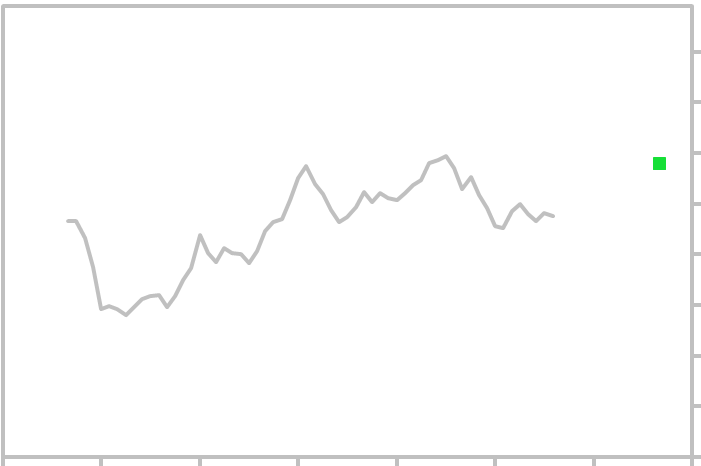
Annual US Inflation Rate is plotted monthly in gray (Consumer Price Index for All Urban Consumers:
All Items). The forecast for the target month is shown in green. Other links related to this economic
indicator are below.
All Items). The forecast for the target month is shown in green. Other links related to this economic
indicator are below.
| CPI for All Urban Consumers: All Items - 5 Year History |
| 1% |
| 2% |
| 3% |
| 4% |
| 5% |
| 0% |
US Inflation Rate Forecast
| ||||||||||||||||||||||||||||||||||||||||||||||||||||||||||||||||||||||||||||
| -1% |
| -2% |
Current Inflation News & Forecast: US Inflation Rate
| -3% |
| ||||||||||





1/14
| 1/2015 |
1/2016
| 1/2017 |
| 1/2018 |
| 1/2019 |
1/2020
| 1/21 |
| ||||||||||||||||