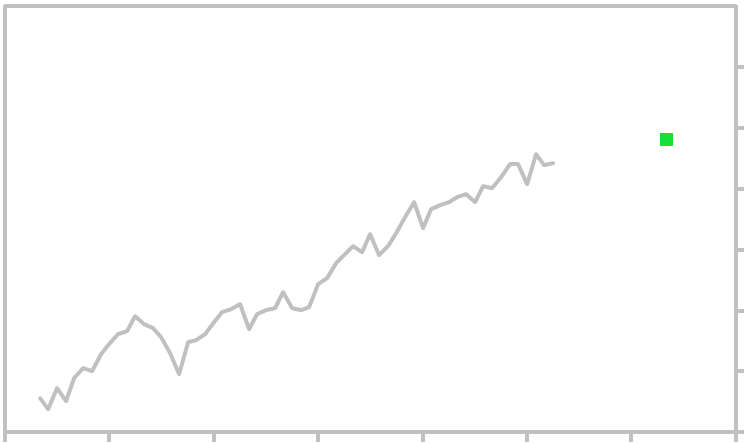
Dow Jones Industrial Average (DJIA) Forecast
Target Month
Forecast
HDTFA
Forecast for the monthly close of the Dow
Jones Industrial Average (DJIA) for the target
month indicated.
Sept. 2011
10002
1131
Updated Wednesday, September 1, 2010.
Dow Jones Industrials: Historical Monthly Change
Month
Percent
Month
Percent
Month
Percent
Month
Percent
Jan
Feb
Mar
0.00
-0.10
1.12
April
May
June
2.65
0.99
-1.21
July
Aug
Sept
1.46
-0.65
-1.29
Oct
Nov
Dec
1.19
1.99
1.69
Over the last 20 years, certain months have typically performed better than others. The
average monthly return for each calender month over the last 20 years is shown above.
Dividends are not included.
__________________________________________
Monthly close for the Dow Jones Industrial Average (DJIA) is plotted in gray. The forecast for the
target month is shown in green. See other links related to this stock index below.
Dow Jones Industrial Average (DJIA) - 5 Year History
Dow Jones Industrial Index Forecast
11500
13000
14500
10000
8500
Dow Industrial Index (DJIA) Forecast
Dow Jones Multi-Index Charts & Analysis
7000
5500
Market Commentary  4802
August, 2010 Data:

Part 1
SUMMARY
All Time High                          13930 (October, 2007)
August, 2010 close                 10015
Decline From All Time High     28%
10 Year Return                       -11%
5 Year Low                             7063 (February, 2009)
Gain From 5 Year Low            42%


Part 2
MARKET HIGHLIGHTS

The 12 month forecast for the Dow Industrial Index is in the table at the top of
this page. ForecastChart.com is forecasting a Dow Jones Industrial Average of
10002. The table shows a HDTFA of 1131 which suggests that the September,
2011 Dow Industrial Average could easily close anywhere between 11132 and
8871. Links to Forecasts for twenty-two other stock indexes may be found on
the right side of this page.

The highest all time monthly close in the DJIA was 13930 in October, of 2007.
The August, 2010 close was 10015. That's a decline of 3915 points or 28%
below the Dow Industrials all time high.  The Dow Industrial Index is down 11%
over the last 10 years. It has gained 5% over the last 12 months.

The August close was 451.22 points lower than the July, 2010 close of 10466,
resulting in a 4.31% decline for August.

The 5 year market low for the Dow Jones Industrial Average was 7063 in
February of 2009. The August, 2010 close at 10014.72 represents a 42% gain
since February, 2009.

ForecastChart.com's historical research covers the Dow Industrial Average
back to February, 1900. All calculations are based on the monthly market close
in the DJIA, excluding dividends.

This page provides a five year chart and a forecast for the Dow Industrials. For
links to longer term charts, look at the links under the five year chart (above).
One link opens a ten year chart. Another opens our longest term graph on the
Dow Industrial Index. Just one glance at our long term charts can provide
tremendous insight into the historical trends of the financial markets. The table
above presents historical data on the Dow Jones Industrial Average categorized
by the months of the calendar.


Part 3
ROLLING RETURNS, 1900 - 2010: Dow Industrial Index

Rolling Period          Last / Percentile          Best / Average / Worst
   1 Year                     5% / 48th                    129% / 7% / -72%
   2 Year                     -13% / 15th               124% / 14% / -84%
   4 Year                     -12% / 12th               268% / 30% / -84%
   8 Year                     16% / 32nd                  467% / 65% / -65%
   16 Year                   156% / 57th               1003% / 180% / -54%

How do you read the table?
For example: Rolling 2 year period returns are shown on the second row. In the
latest rolling 2 year period, (9/2008 - 8/2010), the Dow Industrial Index returned
-13%. That period scored in the 15th percentile, meaning that it scored better
than 15% of all rolling 2 years periods since 1900. The Best rolling 2 Year
period since 1900 returned 124%. The worst returned -84%. The average
rolling 2 year period returned 14%.

What is a rolling period?
It's an overlapping period in a data base. For example: In the 2 year period
included in 2000 - 2001, there are 13 complete rolling 12 Month Periods. The
first is January, 2000 - December, 2000. The second is February, 2000 -
January, 2001. The third is March, 2000 - February, 2001 and so on. The last
complete rolling 12 Month Period in the 2000 - 2001 period is January, 2001 -
December, 2001.

How is this information useful?
Best and worst case scenarios may be estimated based on historical facts.
Also, the relationship of the periods is sometimes very helpful. Suppose that the
worst rolling 8 year period in the last 50 years returned -30%. Suppose also
that the latest 4 year period has returned -50%. Market psychology at this point
may be one of great fear or possibly even panic. If the market stays flat for 4
more years, it will break the 8 year decline record by a whopping 20%! (-50%
minus -30% equals -20%.)  50 plus year records are not often broken. That
provides reason to hope that the market will recover that 20% over the next 4
years. If it does, then the 8 year loss will be 30%. The longest index histories
are found in the DJIA, FTSE 100 with FT 30, DJTA, DJUA, S&P 500, & NASDAQ
100

The number of periods in each category for the Dow Industrial Index are as
follows:
1 Year: 1311
2 Year: 1304
4 Year: 1280
8 Year: 1232
16 Year: 1136

Dividends are not included.


ROLLING RETURNS, 1960 - 2010: Dow Industrial Index

Rolling Period          Last / Percentile          Best / Average / Worst
   1 Year                     5% / 46th                    51% / 7% / -42%
   2 Year                     -13% / 11th               100% / 14% / -42%
   4 Year                     -12% / 7th                  150% / 33% / -34%
   8 Year                     16% / 30th                  277% / 81% / -33%
   16 Year                   156% / 38th               1003% / 280% / -13%

The number of periods in each category for the Dow Industrial Index are as
follows:
1 Year: 596
2 Year: 584
4 Year: 560
8 Year: 512
16 Year: 416

Dividends are not included.


Market Commentary  4726
July, 2010 Data:

Part 1
SUMMARY
All Time High                          13930 (October, 2007)
July, 2010 close                     10466
Decline From All Time High     25%
10 Year Return                       -1%
5 Year Low                             7063 (February, 2009)
Gain From 5 Year Low            48%


Part 2
MARKET HIGHLIGHTS

The 12 month forecast for the Dow Industrial Index is in the table at the top of
this page. ForecastChart.com is forecasting a Dow Jones Industrial Average of
10654. The table shows a HDTFA of 1202 which suggests that the August,
2011 Dow Industrial Average could easily close anywhere between 11856 and
9452. Links to Forecasts for twenty-two other stock indexes may be found on
the right side of this page.

The highest all time monthly close in the DJIA was 13930 in October, of 2007.
The July, 2010 close was 10466. That's a decline of 3464 points or 25% below
the Dow Industrials all time high.  The Dow Industrial Index is down 1% over the
last 10 years. It has gained 14% over the last 12 months.

The July close was 691.92 points higher than the June, 2010 close of 9774,
resulting in a 7.08% rise in July.

The 5 year market low for the Dow Jones Industrial Average was 7063 in
February of 2009. The July, 2010 close at 10465.94 represents a 48% gain
since February, 2009.

ForecastChart.com's historical research covers the Dow Industrial Average
back to February, 1900. All calculations are based on the monthly market close
in the DJIA, excluding dividends.

This page provides a five year chart and a forecast for the Dow Industrials. For
links to longer term charts, look at the links under the five year chart (above).
One link opens a ten year chart. Another opens our longest term graph on the
Dow Industrial Index. Just one glance at our long term charts can provide
tremendous insight into the historical trends of the financial markets. The table
above presents historical data on the Dow Jones Industrial Average categorized
by the months of the calendar.


Part 3
ROLLING RETURNS, 1900 - 2010: Dow Industrial Index

Rolling Period          Last / Percentile          Best / Average / Worst
  1 Year                     14% / 63rd                  129% / 7% / -72%
  2 Year                     -8% / 21st                  124% / 14% / -84%
  4 Year                     -6% / 17th                  268% / 30% / -84%
  8 Year                     20% / 35th                  467% / 65% / -65%
  16 Year                   178% / 59th               1003% / 180% / -54%

How do you read the table?
For example: Rolling 2 year period returns are shown on the second row. In the
latest rolling 2 year period, (8/2008 - 7/2010), the Dow Industrial Index returned
-8%. That period scored in the 21st percentile, meaning that it scored better
than 21% of all rolling 2 years periods since 1900. The Best rolling 2 Year
period since 1900 returned 124%. The worst returned -84%. The average
rolling 2 year period returned 14%.

What is a rolling period?
It's an overlapping period in a data base. For example: In the 2 year period
included in 2000 - 2001, there are 13 complete rolling 12 Month Periods. The
first is January, 2000 - December, 2000. The second is February, 2000 -
January, 2001. The third is March, 2000 - February, 2001 and so on. The last
complete rolling 12 Month Period in the 2000 - 2001 period is January, 2001 -
December, 2001.

How is this information useful?
Best and worst case scenarios may be estimated based on historical facts.
Also, the relationship of the periods is sometimes very helpful. Suppose that the
worst rolling 8 year period in the last 50 years returned -30%. Suppose also
that the latest 4 year period has returned -50%. Market psychology at this point
may be one of great fear or possibly even panic. If the market stays flat for 4
more years, it will break the 8 year decline record by a whopping 20%! (-50%
minus -30% equals -20%.)  50 plus year records are not often broken. That
provides reason to hope that the market will recover that 20% over the next 4
years. If it does, then the 8 year loss will be 30%. The longest index histories
are found in the DJIA, FTSE 100 with FT 30, DJTA, DJUA, S&P 500, & NASDAQ
100

The number of periods in each category for the Dow Industrial Index are as
follows:
1 Year: 1311
2 Year: 1303
4 Year: 1279
8 Year: 1231
16 Year: 1135

Dividends are not included.


ROLLING RETURNS, 1960 - 2010: Dow Industrial Index

Rolling Period          Last / Percentile          Best / Average / Worst
  1 Year                     14% / 65th                  51% / 7% / -42%
  2 Year                     -8% / 16th                  100% / 14% / -42%
  4 Year                     -6% / 12th                  150% / 33% / -34%
  8 Year                     20% / 33rd                  277% / 81% / -33%
  16 Year                   178% / 42nd               1003% / 280% / -13%

The number of periods in each category for the Dow Industrial Index are as
follows:
1 Year: 595
2 Year: 583
4 Year: 559
8 Year: 511
16 Year: 415

Dividends are not included.


Market Commentary  4116
June, 2010 Data:

Part 1
SUMMARY
All Time High                          13930 (October, 2007)
June, 2010 close                     9774
Decline From All Time High     30%
10 Year Return                       -6%
5 Year Low                             7063 (February, 2009)
Gain From 5 Year Low            38%


Part 2
MARKET HIGHLIGHTS

The 12 month forecast for the Dow Industrial Index is in the table at the top of
this page. ForecastChart.com is forecasting a Dow Jones Industrial Average of
9947. The table shows a HDTFA of 1114 which suggests that the July, 2011
Dow Industrial Average could easily close anywhere between 11061 and 8833.
Links to Forecasts for twenty-two other stock indexes may be found on the right
side of this page.

The highest all time monthly close in the DJIA was 13930 in October, of 2007.
The June, 2010 close was 9774. That's a decline of 4156 points or 30% below
the Dow Industrials all time high.  The Dow Industrial Index is down 6% over the
last 10 years. It has gained 16% over the last 12 months.

The June close was 362.61 points lower than the May, 2010 close of 10137,
resulting in a 3.58% decline for June.

The 5 year market low for the Dow Jones Industrial Average was 7063 in
February of 2009. The June, 2010 close at 9774.02 represents a 38% gain
since February, 2009.

ForecastChart.com's historical research covers the Dow Industrial Average
back to February, 1900. All calculations are based on the monthly market close
in the DJIA, excluding dividends.

This page provides a five year chart and a forecast for the Dow Industrials. For
links to longer term charts, look at the links under the five year chart (above).
One link opens a ten year chart. Another opens our longest term graph on the
Dow Industrial Index. Just one glance at our long term charts can provide
tremendous insight into the historical trends of the financial markets. The table
above presents historical data on the Dow Jones Industrial Average categorized
by the months of the calendar.


Part 3
ROLLING RETURNS, 1900 - 2010: Dow Industrial Index

Rolling Period          Last / Percentile          Best / Average / Worst
1 Year                     16% / 66th                  129% / 7% / -72%
2 Year                     -14% / 15th               124% / 14% / -84%
4 Year                     -12% / 12th               268% / 30% / -84%
8 Year                     6% / 25th                    467% / 65% / -65%
16 Year                   170% / 58th               1003% / 180% / -54%

How do you read the table?
For example: Rolling 2 year period returns are shown on the second row. In the
latest rolling 2 year period, (7/2008 - 6/2010), the Dow Industrial Index returned
-14%. That period scored in the 15th percentile, meaning that it scored better
than 15% of all rolling 2 years periods since 1900. The Best rolling 2 Year
period since 1900 returned 124%. The worst returned -84%. The average
rolling 2 year period returned 14%.

What is a rolling period?
It's an overlapping period in a data base. For example: In the 2 year period
included in 2000 - 2001, there are 13 complete rolling 12 Month Periods. The
first is January, 2000 - December, 2000. The second is February, 2000 -
January, 2001. The third is March, 2000 - February, 2001 and so on. The last
complete rolling 12 Month Period in the 2000 - 2001 period is January, 2001 -
December, 2001.

How is this information useful?
Best and worst case scenarios may be estimated based on historical facts.
Also, the relationship of the periods is sometimes very helpful. Suppose that the
worst rolling 8 year period in the last 50 years returned -30%. Suppose also
that the latest 4 year period has returned -50%. Market psychology at this point
may be one of great fear or possibly even panic. If the market stays flat for 4
more years, it will break the 8 year decline record by a whopping 20%! (-50%
minus -30% equals -20%.)  50 plus year records are not often broken. That
provides reason to hope that the market will recover that 20% over the next 4
years. If it does, then the 8 year loss will be 30%. The longest index histories
are found in the DJIA, FTSE 100 with FT 30, DJTA, DJUA, S&P 500, & NASDAQ
100

The number of periods in each category for the Dow Industrial Index are as
follows:
1 Year: 1311
2 Year: 1302
4 Year: 1278
8 Year: 1230
16 Year: 1134

Dividends are not included.


ROLLING RETURNS, 1960 - 2010: Dow Industrial Index

Rolling Period          Last / Percentile          Best / Average / Worst
1 Year                     16% / 69th                  51% / 7% / -42%
2 Year                     -14% / 10th               100% / 14% / -42%
4 Year                     -12% / 7th                  150% / 33% / -34%
8 Year                     6% / 21st                    277% / 81% / -33%
16 Year                   170% / 40th               1003% / 281% / -13%

The number of periods in each category for the Dow Industrial Index are as
follows:
1 Year: 594
2 Year: 582
4 Year: 558
8 Year: 510
16 Year: 414

Dividends are not included.


Market Commentary  4040
May, 2010 Data:

Part 1
SUMMARY
All Time High                          13930 (October, 2007)
May, 2010 close                     10137
Decline From All Time High     27%
10 Year Return                       -4%
5 Year Low                             7063 (February, 2009)
Gain From 5 Year Low            44%


Part 2
MARKET HIGHLIGHTS

The 12 month forecast for the Dow Industrial Index is in the table at the top of
this page. ForecastChart.com is forecasting a Dow Jones Industrial Average of
10156. The table shows a HDTFA of 1136 which suggests that the June, 2011
Dow Industrial Average could easily close anywhere between 11291 and 9020.
Links to Forecasts for twenty-two other stock indexes may be found on the right
side of this page.

The highest all time monthly close in the DJIA was 13930 in October, of 2007.
The May, 2010 close was 10137. That's a decline of 3793 points or 27% below
the Dow Industrials all time high.  The Dow Industrial Index is down 4% over the
last 10 years. It has gained 19% over the last 12 months.

The May close was 871.98 points lower than the April, 2010 close of 11009,
resulting in a 7.92% decline for May.

The 5 year market low for the Dow Jones Industrial Average was 7063 in
February of 2009. The May, 2010 close at 10136.63 represents a 44% gain
since February, 2009.

ForecastChart.com's historical research covers the Dow Industrial Average
back to February, 1900. All calculations are based on the monthly market close
in the DJIA, excluding dividends.

This page provides a five year chart and a forecast for the Dow Industrials. For
links to longer term charts, look at the links under the five year chart (above).
One link opens a ten year chart. Another opens our longest term graph on the
Dow Industrial Index. Just one glance at our long term charts can provide
tremendous insight into the historical trends of the financial markets. The table
above presents historical data on the Dow Jones Industrial Average categorized
by the months of the calendar.


Part 3
ROLLING RETURNS, 1900 - 2010: Dow Industrial Index

Rolling Period          Last / Percentile          Best / Average / Worst
1 Year                     19% / 73rd                  129% / 7% / -72%
2 Year                     -20% / 10th               124% / 14% / -84%
4 Year                     -9% / 14th                  268% / 30% / -84%
8 Year                     2% / 22nd                    467% / 65% / -65%
16 Year                   170% / 58th               1003% / 180% / -54%

How do you read the table?
For example: Rolling 2 year period returns are shown on the second row. In the
latest rolling 2 year period, (6/2008 - 5/2010), the Dow Industrial Index returned
-20%. That period scored in the 10th percentile, meaning that it scored better
than 10% of all rolling 2 years periods since 1900. The Best rolling 2 Year
period since 1900 returned 124%. The worst returned -84%. The average
rolling 2 year period returned 14%.

What is a rolling period?
It's an overlapping period in a data base. For example: In the 2 year period
included in 2000 - 2001, there are 13 complete rolling 12 Month Periods. The
first is January, 2000 - December, 2000. The second is February, 2000 -
January, 2001. The third is March, 2000 - February, 2001 and so on. The last
complete rolling 12 Month Period in the 2000 - 2001 period is January, 2001 -
December, 2001.

How is this information useful?
Best and worst case scenarios may be estimated based on historical facts.
Also, the relationship of the periods is sometimes very helpful. Suppose that the
worst rolling 8 year period in the last 50 years returned -30%. Suppose also
that the latest 4 year period has returned -50%. Market psychology at this point
may be one of great fear or possibly even panic. If the market stays flat for 4
more years, it will break the 8 year decline record by a whopping 20%! (-50%
minus -30% equals -20%.)  50 plus year records are not often broken. That
provides reason to hope that the market will recover that 20% over the next 4
years. If it does, then the 8 year loss will be 30%. The longest index histories
are found in the DJIA, FTSE 100 with FT 30, DJTA, DJUA, S&P 500, & NASDAQ
100

The number of periods in each category for the Dow Industrial Index are as
follows:
1 Year: 1311
2 Year: 1301
4 Year: 1277
8 Year: 1229
16 Year: 1133

Dividends are not included.


ROLLING RETURNS, 1960 - 2010: Dow Industrial Index

Rolling Period          Last / Percentile          Best / Average / Worst
1 Year                     19% / 78th                  51% / 7% / -42%
2 Year                     -20% / 6th                  100% / 14% / -42%
4 Year                     -9% / 9th                    150% / 33% / -34%
8 Year                     2% / 17th                    277% / 81% / -33%
16 Year                   170% / 40th               1003% / 281% / -13%

The number of periods in each category for the Dow Industrial Index are as
follows:
1 Year: 593
2 Year: 581
4 Year: 557
8 Year: 509
16 Year: 413

Dividends are not included.


Market Commentary  3964
April, 2010 Data:

Part 1
SUMMARY
All Time High                          13930 (October, 2007)
April, 2010 close                     11009
Decline From All Time High     21%
10 Year Return                       3%
5 Year Low                             7063 (February, 2009)
Gain From 5 Year Low            56%


Part 2
MARKET HIGHLIGHTS

The 12 month forecast for the Dow Industrial Index is in the table at the top of
this page. ForecastChart.com is forecasting a Dow Jones Industrial Average of
10904. The table shows a HDTFA of 1212 which suggests that the May, 2011
Dow Industrial Average could easily close anywhere between 12116 and 9692.
Links to Forecasts for twenty-two other stock indexes may be found on the right
side of this page.

The highest all time monthly close in the DJIA was 13930 in October, of 2007.
The April, 2010 close was 11009. That's a decline of 2921 points or 21% below
the Dow Industrials all time high.  The Dow Industrial Index is up 3% over the
last 10 years. It has gained 35% over the last 12 months.

The April close was 151.98 points higher than the March, 2010 close of 10857,
resulting in a 1.40% rise in April.

The 5 year market low for the Dow Jones Industrial Average was 7063 in
February of 2009. The April, 2010 close at 11008.61 represents a 56% gain
since February, 2009.

ForecastChart.com's historical research covers the Dow Industrial Average
back to February, 1900. All calculations are based on the monthly market close
in the DJIA, excluding dividends.

This page provides a five year chart and a forecast for the Dow Industrials. For
links to longer term charts, look at the links under the five year chart (above).
One link opens a ten year chart. Another opens our longest term graph on the
Dow Industrial Index. Just one glance at our long term charts can provide
tremendous insight into the historical trends of the financial markets. The table
above presents historical data on the Dow Jones Industrial Average categorized
by the months of the calendar.


Part 3
ROLLING RETURNS, 1900 - 2010: Dow Industrial Index

Rolling Period          Last / Percentile          Best / Average / Worst
1 Year                     35% / 91st                  129% / 7% / -72%
2 Year                     -14% / 15th               124% / 14% / -84%
4 Year                     -3% / 21st                  268% / 30% / -84%
8 Year                     11% / 28th                  467% / 65% / -65%
16 Year                   199% / 61st               1003% / 180% / -54%

How do you read the table?
For example: Rolling 2 year period returns are shown on the second row. In the
latest rolling 2 year period, (5/2008 - 4/2010), the Dow Industrial Index returned
-14%. That period scored in the 15th percentile, meaning that it scored better
than 15% of all rolling 2 years periods since 1900. The Best rolling 2 Year
period since 1900 returned 124%. The worst returned -84%. The average
rolling 2 year period returned 14%.

What is a rolling period?
It's an overlapping period in a data base. For example: In the 2 year period
included in 2000 - 2001, there are 13 complete rolling 12 Month Periods. The
first is January, 2000 - December, 2000. The second is February, 2000 -
January, 2001. The third is March, 2000 - February, 2001 and so on. The last
complete rolling 12 Month Period in the 2000 - 2001 period is January, 2001 -
December, 2001.

How is this information useful?
Best and worst case scenarios may be estimated based on historical facts.
Also, the relationship of the periods is sometimes very helpful. Suppose that the
worst rolling 8 year period in the last 50 years returned -30%. Suppose also
that the latest 4 year period has returned -50%. Market psychology at this point
may be one of panic. If the market stays flat for 4 more years, it will break the 8
year decline record by a whopping 20%! (-50% minus -30% equals -20%.)  50
plus year records are not often broken. That provides reason to hope that the
market will recover that 20% over the next 4 years. If it does, then the 8 year
loss will be 30%. The longest index histories are found in the DJIA, FTSE 100
with FT 30, DJTA, DJUA, S&P 500, & NASDAQ 100

The number of periods in each category for the Dow Industrial Index are as
follows:
1 Year: 1311
2 Year: 1300
4 Year: 1276
8 Year: 1228
16 Year: 1132

Dividends are not included.


ROLLING RETURNS, 1960 - 2010: Dow Industrial Index

Rolling Period          Last / Percentile          Best / Average / Worst
1 Year                     35% / 94th                  51% / 7% / -42%
2 Year                     -14% / 10th               100% / 14% / -42%
4 Year                     -3% / 17th                  150% / 33% / -34%
8 Year                     11% / 26th                  277% / 81% / -33%
16 Year                   199% / 44th               1003% / 281% / -13%

The number of periods in each category for the Dow Industrial Index are as
follows:
1 Year: 592
2 Year: 580
4 Year: 556
8 Year: 508
16 Year: 412

Dividends are not included.


Market Commentary  3354
March, 2010 Data:

Part 1
SUMMARY
All Time High                          13930 (October, 2007)
March, 2010 close                  10857
Decline From All Time High     22%
10 Year Return                       -1%
5 Year Low                             7063 (February, 2009)
Gain From 5 Year Low            54%


Part 2
MARKET HIGHLIGHTS

The 12 month forecast for the Dow Industrial Index is in the table at the top of
this page. ForecastChart.com is forecasting a Dow Jones Industrial Average of
11320. The table shows a HDTFA of 1239 which suggests that the April, 2011
Dow Industrial Average could easily close anywhere between 12559 and 10081.
Links to Forecasts for twenty-two other stock indexes may be found on the right
side of this page.

The highest all time monthly close in the DJIA was 13930 in October, of 2007.
The March, 2010 close was 10857. That's a decline of 3073 points or 22%
below the Dow Industrials all time high.  The Dow Industrial Index is down 1%
over the last 10 years. It has gained 43% over the last 12 months.

The March close was 531.37 points higher than the February, 2010 close of
10325, resulting in a 5.15% rise in March.

The 5 year market low for the Dow Jones Industrial Average was 7063 in
February of 2009. The March, 2010 close at 10856.63 represents a 54% gain
since February, 2009.

ForecastChart.com's historical research covers the Dow Industrial Average
back to February, 1900. All calculations are based on the monthly market close
in the DJIA, excluding dividends.

This page provides a five year chart and a forecast for the Dow Industrials. For
links to longer term charts, look at the links under the five year chart (above).
One link opens a ten year chart. Another opens our longest term graph on the
Dow Industrial Index. Just one glance at our long term charts can provide
tremendous insight into the historical trends of the financial markets. The table
above presents historical data on the Dow Jones Industrial Average categorized
by the months of the calendar.


Part 3
ROLLING RETURNS, 1900 - 2010: Dow Industrial Index

Period          Last / Percentile          Best / Average / Worst
1 Year              43% / 95th                  129% / 7% / -72%
2 Year              -11% / 18th               124% / 14% / -84%
4 Year              -2% / 22nd                  268% / 30% / -84%
8 Year              4% / 24th                    467% / 65% / -65%
16 Year            199% / 61st               1003% / 180% / -54%

How do you read the table?
For example: In the latest rolling 2 year period, (4/2008 - 3/2010), the Dow
Industrial Index returned -11%. That period scored in the 18th percentile,
meaning that it scored better than 18% of all rolling 2 years periods since 1900.
The Best rolling 2 Year period since 1900 returned 124%. The worst returned
-84%. The average rolling 2 year period returned 14%.

What is a rolling period?
It's an overlapping period in a data base. For example: In the 2 year period
included in 2000 - 2001, there are 13 complete rolling 2 year periods. The first
is January, 2000 - December, 2000. The second is February, 2000 - January,
2001. The third is March, 2000 - February, 2001 and so on. The last complete
rolling 12 month period in the 2000 - 2001 period is January, 2001 - December,
2001.

The relationship of the periods is sometimes very helpful. Suppose that the
worst rolling 8 year period in the last 50 years returned -30%. Suppose also
that the latest 4 year period has returned -50%. Market psychology at this point
may be one of panic. If the market stays flat for 4 more years, it will break the 8
year decline record by a whopping 20%! (-50% minus -30% equals -20%.)  50
plus year records are not often broken. That provides reason to hope that the
market will recover that 20% over the next 4 years. If it does, then the 8 year
loss will be 30%. The longest index histories are found in the DJIA, FTSE 100
with FT 30, DJTA, DJUA, S&P 500, & NASDAQ 100

The number of periods in each category for the Dow Industrial Index are as
follows:
1 Year: 1311
2 Year: 1299
4 Year: 1275
8 Year: 1227
16 Year: 1131

Dividends are not included.


ROLLING RETURNS, 1960 - 2010: Dow Industrial Index

Period          Last / Percentile          Best / Average / Worst
1 Year              43% / 98th                  51% / 7% / -42%
2 Year              -11% / 13th               100% / 14% / -42%
4 Year              -2% / 18th                  150% / 33% / -34%
8 Year              4% / 20th                    277% / 82% / -33%
16 Year            199% / 44th               1003% / 281% / -13%

The number of periods in each category for the Dow Industrial Index are as
follows:
1 Year: 591
2 Year: 579
4 Year: 555
8 Year: 507
16 Year: 411

Dividends are not included.


Market Commentary  3278
February, 2010 Data:

The 12 month forecast for the Dow Industrial Index is in the table at the top of
this page. ForecastChart.com is forecasting a Dow Jones Industrial Average of
10728. The table shows a HDTFA of 1149 which suggests that the March, 2011
Dow Industrial Average could easily close anywhere between 11877 and 9579.
Links to Forecasts for twenty-two other stock indexes may be found on the right
side of this page.

The highest all time monthly close in the DJIA was 13930 in October, of 2007.
The February, 2010 close was 10325. That's a decline of 3605 points or 26%
below the Dow Industrials all time high.  The Dow Industrial Index is up 2% over
the last 10 years. It has gained 46% over the last 12 months.

The February close was 257.93 points higher than the January, 2010 close of
10067, resulting in a 2.56% rise in February.

The 5 year market low for the Dow Jones Industrial Average was 7063 in
February of 2009. The February, 2010 close at 10325.26 represents a 46%
gain since February, 2009.

ForecastChart.com's historical research covers the Dow Industrial Average
back to February, 1900. All calculations are based on the monthly market close
in the DJIA, excluding dividends.

This page provides a five year chart and a forecast for the Dow Industrials. For
links to longer term charts, look at the links under the five year chart (above).
One link opens a ten year chart. Another opens our longest term graph on the
Dow Industrial Index. Just one glance at our long term charts can provide
tremendous insight into the historical trends of the financial markets. The table
above presents historical data on the Dow Jones Industrial Average categorized
by the months of the calendar.


Commentary  3202
January, 2010 Data:

The 12 month forecast for the Dow Industrial Index is in the table at the top of
this page. ForecastChart.com is forecasting a Dow Jones Industrial Average of
10361. The table shows a HDTFA of 1096 which suggests that the February,
2011 Dow Industrial Average could easily close anywhere between 11457 and
9265. Links to Forecasts for twenty-two other stock indexes may be found on
the right side of this page.

The highest all time monthly close in the DJIA was 13930 in October, of 2007.
The January, 2010 close was 10067. That's a decline of 3863 points or 28%
below the Dow Industrials all time high.  The Dow Industrial Index is down 8%
over the last 10 years. It has gained 26% over the last 12 months.

The January close was 360.72 points lower than the December, 2009 close of
10428, resulting in a 3.46% decline for January.

The 5 year low for the Dow Jones Industrial Average was 7063 in February of
2009. The January, 2010 close at 10067.33 represents a 43% gain since
February, 2009.

ForecastChart.com's historical research covers the Dow Industrial Average
back to February, 1900. All calculations are based on the monthly close in the
DJIA, excluding dividends.

This page provides a five year chart and a forecast for the Dow Industrials. For
links to longer term charts, look at the links under the five year chart (above).
One link opens a ten year chart. Another opens our longest term graph on the
Dow Industrial Index. Just one glance at our long term charts can provide
tremendous insight into the historical trends of the financial markets. The table
above presents historical data on the Dow Jones Industrial Average categorized
by the months of the calendar.


Commentary  2211
December, 2009 Data:

The 12 month forecast for the Dow Industrial Index is in the table at the top of
this page. We are forecasting a Dow Jones Industrial Average of 10499. The
table shows a HDTFA of 1105 which suggests that the January, 2011 Dow
Industrial Average could easily close anywhere between 11604 and 9393. Links
to Forecasts for twenty-two other stock indexes may be found on the right side
of this page.

The highest all time monthly close in the DJIA was 13930 in October, of 2007.
The December, 2009 close was 10428. That's a decline of 3502 points or 25%
below the Dow Industrials all time high.  The Dow Industrial Index is down 9%
over the last 10 years. It has gained 19% over the last 12 months.

The December close was 83.21 points higher than the November, 2009 close of
10345, resulting in a 0.80% rise in December.

The 5 year low for the Dow Jones Industrial Average was 7063 in February of
2009. The December, 2009 close at 10428.05 represents a 48% gain since
February, 2009.

ForecastChart.com's historical research covers the Dow Industrial Average
back to February, 1900. All calculations are based on the monthly close in the
DJIA, excluding dividends.

This page provides a five year chart and a forecast for the Dow Industrials. For
links to longer term charts, look at the links under the five year chart (above).
One link opens a ten year chart. Another opens our longest term graph on the
Dow Industrial Index. Just one glance at our long term charts can provide
tremendous insight into the historical trends of the financial markets. The table
above presents historical data on the Dow Jones Industrial Average categorized
by the months of the calendar.


Commentary  2135
November, 2009 Data:

The 12 month forecast for the Dow Industrial Index is in the table at the top of
this page. We are forecasting a Dow Jones Industrial Average of 10317. The
table shows a HDTFA of 1077 which suggests that the December, 2010 Dow
Industrial Average could easily close anywhere between 11394 and 9240. Links
to Forecasts for twenty-two other stock indexes may be found on the right side
of this page.

The highest all time monthly close in the DJIA was 13930 in October, of 2007.
The November, 2009 close was 10345. That's a decline of 3585 points or 26%
below the Dow Industrials all time high.  The Dow Industrial Index is down 5%
over the last 10 years. It has gained 17% over the last 12 months.

The November close was 632.11 points higher than the October, 2009 close of
9713, resulting in a 6.51% rise in November.

The 5 year low for the Dow Jones Industrial Average was 7063 in February of
2009. The November, 2009 close at 10344.84 represents a 46% gain since
February, 2009.

Our historical research covers the Dow Industrial Average back to February,
1900. All calculations are based on the monthly close in the DJIA, excluding
dividends.

This page provides a five year chart and a forecast for the Dow Industrials. For
links to longer term charts, look at the links under the five year chart (above).
One link opens a ten year chart. Another opens our longest term graph on the
Dow Industrial Index. Just one glance at our long term charts can provide
tremendous insight into the historical trends of the financial markets. The table
above presents historical data on the Dow Jones Industrial Average categorized
by the months of the calendar.


Commentary  2059
October, 2009 Data:

The 12 month forecast for the Dow Industrial Index is in the table at the top of
this page. We are forecasting a Dow Jones Industrial Average of 9606. The
table shows a HDTFA of 1000 which suggests that the November, 2010 Dow
Industrial Average could easily close anywhere between 10606 and 8606. Links
to Forecasts for twenty-two other stock indexes may be found on the right side
of this page.

The highest all time monthly close in the DJIA was 13930 in October, of 2007.
The October, 2009 close was 9713. That's a decline of 4217 points or 30%
below the Dow Industrials all time high.  The Dow Industrial Index is down 9%
over the last 10 years. It has gained 4% over the last 12 months.

The October close was 0.45 points higher than the September, 2009 close of
9712, resulting in a 0.00% rise in October.

The 5 year low for the Dow Jones Industrial Average was 7063 in February of
2009. The October, 2009 close at 9712.73 represents a 38% gain since
February, 2009.

Our historical research covers the Dow Industrial Average back to February,
1900. All calculations are based on the monthly close in the DJIA, excluding
dividends.

This page provides a five year chart and a forecast for the Dow Industrials. For
links to longer term charts, look at the links under the five year chart (above).
One link opens a ten year chart. Another opens our longest term graph on the
Dow Industrial Index. Just one glance at our long term charts can provide
tremendous insight into the historical trends of the financial markets. The table
above presents historical data on the Dow Jones Industrial Average categorized
by the months of the calendar.


Commentary  1068
September, 2009 Data:

The 12 month forecast for the Dow Industrial Index is in the table at the top of
this page. We are forecasting a Dow Jones Industrial Average of 9530. The
table shows a HDTFA of 987 which suggests that the October, 2010 Dow
Industrial Average could easily close anywhere between 10517 and 8544. Links
to Forecasts for twenty-two other stock indexes may be found on the right side
of this page.

The highest all time monthly close in the DJIA was 13930 in October, of 2007.
The September, 2009 close was 9712. That's a decline of 4218 points or 30%
below the Dow Industrials all time high.  The Dow Industrial Index is down 6%
over the last 10 years. It has lost 10% over the last 12 months.

The September close was 216.00 points higher than the August, 2009 close of
9496, resulting in a 2.27% rise in September.

The 5 year low for the Dow Jones Industrial Average was 7063 in February of
2009. The September, 2009 close at 9712.28 represents a 38% gain since
February, 2009.

Our historical research covers the Dow Industrial Average back to February,
1900. All calculations are based on the monthly close in the DJIA, excluding
dividends.

This page provides a five year chart and a forecast for the Dow Industrials. For
links to longer term charts, look at the links under the five year chart (above).
One link opens a ten year chart. Another opens our longest term graph on the
Dow Industrial Index. Just one glance at our long term charts can provide
tremendous insight into the historical trends of the financial markets. The table
above presents historical data on the Dow Jones Industrial Average categorized
by the months of the calendar.


Commentary  992
August, 2009 Data:

The 12 month forecast for the Dow Industrial Index is in the table at the top of
this page. We are forecasting a Dow Jones Industrial Average of 9177. The
table shows a HDTFA of 942 which suggests that the September, 2010 Dow
Industrial Average could easily close anywhere between 10120 and 8235. Links
to Forecasts for twenty-two other stock indexes may be found on the right side
of this page.

The highest all time monthly close in the DJIA was 13930 in October, of 2007.
The August, 2009 close was 9496. That's a decline of 4434 points or 32%
below the Dow Industrials all time high.  The Dow Industrial Index is down 12%
over the last 10 years. It has lost 18% over the last 12 months.

The August close was 324.67 points higher than the July, 2009 close of 9172,
resulting in a 3.54% rise in August.

The 5 year low for the Dow Jones Industrial Average was 7063 in February of
2009. The August, 2009 close at 9496.28 represents a 34% gain since
February, 2009.

Our historical research covers the Dow Industrial Average back to February,
1900. All calculations are based on the monthly close in the DJIA, excluding
dividends.

This page provides a five year chart and a forecast for the Dow Industrials. For
links to longer term charts, look at the links under the five year chart (above).
One link opens a ten year chart. Another opens our longest term graph on the
Dow Industrial Index. Just one glance at our long term charts can provide
tremendous insight into the historical trends of the financial markets. The table
above presents historical data on the Dow Jones Industrial Average categorized
by the months of the calendar.


Commentary  916
July, 2009 Data:

The 12 month forecast for the Dow Industrial Index is in the table at the top of
this page. We are forecasting a Dow Jones Industrial Average of 9059. The
table shows a HDTFA of 922 which suggests that the August, 2010 Dow
Industrial Average could easily close anywhere between 9981 and 8136. Links
to Forecasts for twenty-two other stock indexes may be found on the right side
of this page.

The highest all time monthly close in the DJIA was 13930 in October, of 2007.
The July, 2009 close was 9172. That's a decline of 4758 points or 34% below
the Dow Industrials all time high.  The Dow Industrial Index is down 14% over
the last 10 years. It has lost 19% over the last 12 months.

The July close was 724.61 points higher than the June, 2009 close of 8447,
resulting in a 8.58% rise in July.

The 5 year low for the Dow Jones Industrial Average was 7063 in February of
2009. The July, 2009 close at 9171.61 represents a 30% gain since February,
2009.

Our historical research covers the Dow Industrial Average back to February,
1900. All calculations are based on the monthly close in the DJIA, excluding
dividends.

This page provides a five year chart and a forecast for the Dow Industrials. For
links to longer term charts, look at the links under the five year chart (above).
One link opens a ten year chart. Another opens our longest term graph on the
Dow Industrial Index. Just one glance at our long term charts can provide
tremendous insight into the historical trends of the financial markets. The table
above presents historical data on the Dow Jones Industrial Average categorized
by the months of the calendar.


June, 2009 Data:
The 12 month forecast for the Dow Industrial Index is in the table at the top of
this page. We are forecasting a Dow Jones Industrial Average of 8462. The
table shows a HDTFA of 857 which suggests that the July, 2010 Dow Industrial
Average could easily close anywhere between 9319 and 7605. Links to
Forecasts for twenty-two other stock indexes may be found on the right side of
this page.

The highest all time monthly close in the DJIA was 13930 in October, of 2007.
The June, 2009 close was 8447. That's a decline of 5483 points or 39% below
the Dow Industrials all time high.  The Dow Industrial Index is down 23% over
the last 10 years. It has lost 26% over the last 12 months.

The June close was 53.33 points lower than the May, 2009 close of 8500,
resulting in a 0.63% decline for June.

The 5 year low for the Dow Jones Industrial Average was 7063 in February of
2009. The June, 2009 close at 8447 represents a 20% gain since February,
2009.

Our historical research covers the Dow Industrial Average back to January,
1900. All calculations are based on the monthly close in the DJIA, excluding
dividends.

This page provides a five year chart and a forecast for the Dow Industrials. For
links to longer term charts, look at the links under the five year chart (above).
One link opens a ten year chart. Another opens our longest term graph on the
Dow Industrial Index. Just one glance at our long term charts can provide
tremendous insight into the historical trends of the financial markets. The table
below presents historical data on the Dow Jones Industrial Average categorized
by the months of the calendar.


_____________________________________________________________
Home       About       Search      1000 Charts      Report a Problem with this Page
Site Map      Contact Us      Privacy Policy      Terms of Use/Disclosure     

SignalTrend Inc.  2008 - 2009, All Rights Reserved
Current Analysis & Forecast: Dow Jones Industrial Index
Home        About Us
1/05         1/2006           1/2007            1/2008           1/2009           1/2010           1/2011            1/12
...Over 1000 charts and
hundreds of commentaries
for hundreds of financial
indexes!
At ForecastChart.com
● Home Values: 500 Cities
● Economic Indicators
● Stock Indexes
● Foreign Currencies
● Interest Rates

Updated monthly, quarterly or annually.