
__________________________________________
1700
2000
2300
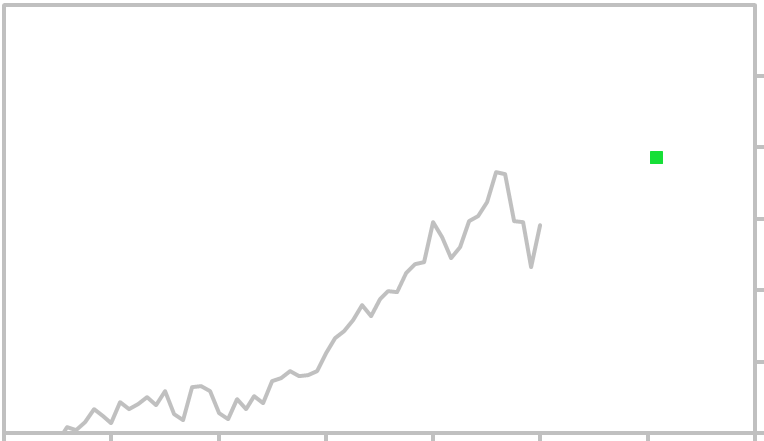
Monthly close for the NASDAQ 100 Stock Index is plotted in gray. The forecast for the target month is
shown in green. See other links related to this stock index below.
NASDAQ 100 Stock Index - 5 Year History
NASDAQ 100 Stock Index Forecast
Target Month
Forecast
HDTFA
Forecast for the monthly close of the NASDAQ
100 Stock Index for the target month indicated.
Sept. 2011
1959
438
Updated Wednesday, September 1, 2010.
NASDAQ 100 Index Forecast
1400
1100
2600
NASDAQ 100 Index Forecast
Dow Jones Multi-Index Charts & Analysis
1100
800
NASDAQ 100: Historical Monthly Change
Month
Percent
Month
Percent
Month
Percent
Month
Percent
Jan
Feb
Mar
2.50
-0.92
0.68
April
May
June
1.79
1.38
0.04
July
Aug
Sept
1.20
0.53
-0.55
Oct
Nov
Dec
2.74
2.96
2.44
Over the last 20 years, certain months have typically performed better than others. The
average monthly return for each calender month over the last 20 years is shown above.
Dividends are not included.
Market Commentary  4806
August, 2010 Data:

Part 1
SUMMARY
All Time High                          4398 (March, 2000)
August, 2010 close                1767
Decline From All Time High     60%
10 Year Return                       -57%
5 Year Low                             1117 (February, 2009)
Gain From 5 Year Low            58%


Part 2
MARKET HIGHLIGHTS

The 12 month forecast for the NASDAQ 100 Index is in the table at the top of
this page. ForecastChart.com is forecasting a NASDAQ 100 Stock Index of
1959. The table shows a HDTFA of 438 which suggests that the September,
2011 NASDAQ 100 Index could easily close anywhere between 2397 and 1521.
Links to Forecasts for twenty-two other stock indexes may be found on the right
side of this page.

The highest all time monthly close in the NASDAQ 100 Stock Index was 4398 in
March, of 2000. The August, 2010 close was 1767. That's a decline of 2630
points or 60% below the NASDAQ 100 all time high.  The NASDAQ 100 Index is
down 57% over the last 10 years. It has gained 9% over the last 12 months.

The August close was 96.57 points lower than the July, 2010 close of 1864,
resulting in a 5.18% decline for August.

The 5 year market low for the NASDAQ 100 Stock Index was 1117 in February
of 2009. The August, 2010 close at 1767.43 represents a 58% gain since
February, 2009.

ForecastChart.com's historical research covers the NASDAQ 100 Index back to
March, 1971. All calculations are based on the monthly market close in the
NASDAQ 100 Stock Index, excluding dividends.

This page provides a five year chart and a forecast for the NASDAQ 100. For
links to longer term charts, look at the links under the five year chart (above).
One link opens a ten year chart. Another opens our longest term graph on the
NASDAQ 100 Index. Just one glance at our long term charts can provide
tremendous insight into the historical trends of the financial markets. The table
above presents historical data on the NASDAQ 100 Stock Index categorized by
the months of the calendar.


Part 3
ROLLING RETURNS, 1971 - 2010: NASDAQ 100 Index

Rolling Period          Last / Percentile          Best / Average / Worst
   1 Year                     9% / 40th                    122% / 14% / -67%
   2 Year                     -6% / 17th                  274% / 28% / -77%
   4 Year                     12% / 23rd                  621% / 71% / -67%
   8 Year                     88% / 28th                  1263% / 197% / -59%
   16 Year                   344% / 16th               3407% / 746% / 155%

How do you read the table?
For example: Rolling 2 year period returns are shown on the second row. In the
latest rolling 2 year period, (9/2008 - 8/2010), the NASDAQ 100 Index returned
-6%. That period scored in the 17th percentile, meaning that it scored better
than 17% of all rolling 2 years periods since 1971. The Best rolling 2 Year
period since 1971 returned 274%. The worst returned -77%. The average
rolling 2 year period returned 28%.

What is a rolling period?
It's an overlapping period in a data base. For example: In the 2 year period
included in 2000 - 2001, there are 13 complete rolling 12 Month Periods. The
first is January, 2000 - December, 2000. The second is February, 2000 -
January, 2001. The third is March, 2000 - February, 2001 and so on. The last
complete rolling 12 Month Period in the 2000 - 2001 period is January, 2001 -
December, 2001.

How is this information useful?
Best and worst case scenarios may be estimated based on historical facts.
Also, the relationship of the periods is sometimes very helpful. Suppose that the
worst rolling 8 year period in the last 50 years returned -30%. Suppose also
that the latest 4 year period has returned -50%. Market psychology at this point
may be one of great fear or possibly even panic. If the market stays flat for 4
more years, it will break the 8 year decline record by a whopping 20%! (-50%
minus -30% equals -20%.)  50 plus year records are not often broken. That
provides reason to hope that the market will recover that 20% over the next 4
years. If it does, then the 8 year loss will be 30%. The longest index histories
are found in the DJIA, FTSE 100 with FT 30, DJTA, DJUA, S&P 500, & NASDAQ
100

The number of periods in each category for the NASDAQ 100 Index are as
follows:
1 Year: 463
2 Year: 451
4 Year: 427
8 Year: 379
16 Year: 283

Dividends are not included.


Market Commentary  4730
July, 2010 Data:

Part 1
SUMMARY
All Time High                          4398 (March, 2000)
July, 2010 close                     1864
Decline From All Time High     58%
10 Year Return                       -48%
5 Year Low                             1117 (February, 2009)
Gain From 5 Year Low            67%


Part 2
MARKET HIGHLIGHTS

The 12 month forecast for the NASDAQ 100 Index is in the table at the top of
this page. ForecastChart.com is forecasting a NASDAQ 100 Stock Index of
2125. The table shows a HDTFA of 476 which suggests that the August, 2011
NASDAQ 100 Index could easily close anywhere between 2601 and 1649. Links
to Forecasts for twenty-two other stock indexes may be found on the right side
of this page.

The highest all time monthly close in the NASDAQ 100 Stock Index was 4398 in
March, of 2000. The July, 2010 close was 1864. That's a decline of 2534 points
or 58% below the NASDAQ 100 all time high.  The NASDAQ 100 Index is down
48% over the last 10 years. It has gained 16% over the last 12 months.

The July close was 124.86 points higher than the June, 2010 close of 1739,
resulting in a 7.18% rise in July.

The 5 year market low for the NASDAQ 100 Stock Index was 1117 in February
of 2009. The July, 2010 close at 1864 represents a 67% gain since February,
2009.

ForecastChart.com's historical research covers the NASDAQ 100 Index back to
March, 1971. All calculations are based on the monthly market close in the
NASDAQ 100 Stock Index, excluding dividends.

This page provides a five year chart and a forecast for the NASDAQ 100. For
links to longer term charts, look at the links under the five year chart (above).
One link opens a ten year chart. Another opens our longest term graph on the
NASDAQ 100 Index. Just one glance at our long term charts can provide
tremendous insight into the historical trends of the financial markets. The table
above presents historical data on the NASDAQ 100 Stock Index categorized by
the months of the calendar.


Part 3
ROLLING RETURNS, 1971 - 2010: NASDAQ 100 Index

Rolling Period          Last / Percentile          Best / Average / Worst
  1 Year                     16% / 55th                  122% / 14% / -67%
  2 Year                     1% / 23rd                    274% / 28% / -77%
  4 Year                     23% / 29th                  621% / 72% / -67%
  8 Year                     94% / 32nd                  1263% / 197% / -59%
  16 Year                   404% / 20th               3407% / 748% / 155%

How do you read the table?
For example: Rolling 2 year period returns are shown on the second row. In the
latest rolling 2 year period, (8/2008 - 7/2010), the NASDAQ 100 Index returned
1%. That period scored in the 23rd percentile, meaning that it scored better
than 23% of all rolling 2 years periods since 1971. The Best rolling 2 Year
period since 1971 returned 274%. The worst returned -77%. The average
rolling 2 year period returned 28%.

What is a rolling period?
It's an overlapping period in a data base. For example: In the 2 year period
included in 2000 - 2001, there are 13 complete rolling 12 Month Periods. The
first is January, 2000 - December, 2000. The second is February, 2000 -
January, 2001. The third is March, 2000 - February, 2001 and so on. The last
complete rolling 12 Month Period in the 2000 - 2001 period is January, 2001 -
December, 2001.

How is this information useful?
Best and worst case scenarios may be estimated based on historical facts.
Also, the relationship of the periods is sometimes very helpful. Suppose that the
worst rolling 8 year period in the last 50 years returned -30%. Suppose also
that the latest 4 year period has returned -50%. Market psychology at this point
may be one of great fear or possibly even panic. If the market stays flat for 4
more years, it will break the 8 year decline record by a whopping 20%! (-50%
minus -30% equals -20%.)  50 plus year records are not often broken. That
provides reason to hope that the market will recover that 20% over the next 4
years. If it does, then the 8 year loss will be 30%. The longest index histories
are found in the DJIA, FTSE 100 with FT 30, DJTA, DJUA, S&P 500, & NASDAQ
100

The number of periods in each category for the NASDAQ 100 Index are as
follows:
1 Year: 462
2 Year: 450
4 Year: 426
8 Year: 378
16 Year: 282

Dividends are not included.


Market Commentary  4120
June, 2010 Data:

Part 1
SUMMARY
All Time High                          4398 (March, 2000)
June, 2010 close                     1739
Decline From All Time High     60%
10 Year Return                       -54%
5 Year Low                             1117 (February, 2009)
Gain From 5 Year Low            56%


Part 2
MARKET HIGHLIGHTS

The 12 month forecast for the NASDAQ 100 Index is in the table at the top of
this page. ForecastChart.com is forecasting a NASDAQ 100 Stock Index of
1965. The table shows a HDTFA of 439 which suggests that the July, 2011
NASDAQ 100 Index could easily close anywhere between 2404 and 1525. Links
to Forecasts for twenty-two other stock indexes may be found on the right side
of this page.

The highest all time monthly close in the NASDAQ 100 Stock Index was 4398 in
March, of 2000. The June, 2010 close was 1739. That's a decline of 2659
points or 60% below the NASDAQ 100 all time high.  The NASDAQ 100 Index is
down 54% over the last 10 years. It has gained 18% over the last 12 months.

The June close was 113.25 points lower than the May, 2010 close of 1852,
resulting in a 6.11% decline for June.

The 5 year market low for the NASDAQ 100 Stock Index was 1117 in February
of 2009. The June, 2010 close at 1739.14 represents a 56% gain since
February, 2009.

ForecastChart.com's historical research covers the NASDAQ 100 Index back to
March, 1971. All calculations are based on the monthly market close in the
NASDAQ 100 Stock Index, excluding dividends.

This page provides a five year chart and a forecast for the NASDAQ 100. For
links to longer term charts, look at the links under the five year chart (above).
One link opens a ten year chart. Another opens our longest term graph on the
NASDAQ 100 Index. Just one glance at our long term charts can provide
tremendous insight into the historical trends of the financial markets. The table
above presents historical data on the NASDAQ 100 Stock Index categorized by
the months of the calendar.


Part 3
ROLLING RETURNS, 1971 - 2010: NASDAQ 100 Index

Rolling Period          Last / Percentile          Best / Average / Worst
1 Year                     18% / 59th                  122% / 14% / -67%
2 Year                     -5% / 18th                  274% / 28% / -77%
4 Year                     10% / 23rd                  621% / 72% / -67%
8 Year                     65% / 24th                  1263% / 198% / -59%
16 Year                   383% / 19th               3407% / 749% / 155%

How do you read the table?
For example: Rolling 2 year period returns are shown on the second row. In the
latest rolling 2 year period, (7/2008 - 6/2010), the NASDAQ 100 Index returned
-5%. That period scored in the 18th percentile, meaning that it scored better
than 18% of all rolling 2 years periods since 1971. The Best rolling 2 Year
period since 1971 returned 274%. The worst returned -77%. The average
rolling 2 year period returned 28%.

What is a rolling period?
It's an overlapping period in a data base. For example: In the 2 year period
included in 2000 - 2001, there are 13 complete rolling 12 Month Periods. The
first is January, 2000 - December, 2000. The second is February, 2000 -
January, 2001. The third is March, 2000 - February, 2001 and so on. The last
complete rolling 12 Month Period in the 2000 - 2001 period is January, 2001 -
December, 2001.

How is this information useful?
Best and worst case scenarios may be estimated based on historical facts.
Also, the relationship of the periods is sometimes very helpful. Suppose that the
worst rolling 8 year period in the last 50 years returned -30%. Suppose also
that the latest 4 year period has returned -50%. Market psychology at this point
may be one of great fear or possibly even panic. If the market stays flat for 4
more years, it will break the 8 year decline record by a whopping 20%! (-50%
minus -30% equals -20%.)  50 plus year records are not often broken. That
provides reason to hope that the market will recover that 20% over the next 4
years. If it does, then the 8 year loss will be 30%. The longest index histories
are found in the DJIA, FTSE 100 with FT 30, DJTA, DJUA, S&P 500, & NASDAQ
100

The number of periods in each category for the NASDAQ 100 Index are as
follows:
1 Year: 461
2 Year: 449
4 Year: 425
8 Year: 377
16 Year: 281

Dividends are not included.


Market Commentary  4044
May, 2010 Data:

Part 1
SUMMARY
All Time High                          4398 (March, 2000)
May, 2010 close                     1852
Decline From All Time High     58%
10 Year Return                       -44%
5 Year Low                             1117 (February, 2009)
Gain From 5 Year Low            66%


Part 2
MARKET HIGHLIGHTS

The 12 month forecast for the NASDAQ 100 Index is in the table at the top of
this page. ForecastChart.com is forecasting a NASDAQ 100 Stock Index of
2060. The table shows a HDTFA of 461 which suggests that the June, 2011
NASDAQ 100 Index could easily close anywhere between 2521 and 1599. Links
to Forecasts for twenty-two other stock indexes may be found on the right side
of this page.

The highest all time monthly close in the NASDAQ 100 Stock Index was 4398 in
March, of 2000. The May, 2010 close was 1852. That's a decline of 2545 points
or 58% below the NASDAQ 100 all time high.  The NASDAQ 100 Index is down
44% over the last 10 years. It has gained 29% over the last 12 months.

The May close was 148.24 points lower than the April, 2010 close of 2001,
resulting in a 7.41% decline for May.

The 5 year market low for the NASDAQ 100 Stock Index was 1117 in February
of 2009. The May, 2010 close at 1852.39 represents a 66% gain since
February, 2009.

ForecastChart.com's historical research covers the NASDAQ 100 Index back to
March, 1971. All calculations are based on the monthly market close in the
NASDAQ 100 Stock Index, excluding dividends.

This page provides a five year chart and a forecast for the NASDAQ 100. For
links to longer term charts, look at the links under the five year chart (above).
One link opens a ten year chart. Another opens our longest term graph on the
NASDAQ 100 Index. Just one glance at our long term charts can provide
tremendous insight into the historical trends of the financial markets. The table
above presents historical data on the NASDAQ 100 Stock Index categorized by
the months of the calendar.


Part 3
ROLLING RETURNS, 1971 - 2010: NASDAQ 100 Index

Rolling Period          Last / Percentile          Best / Average / Worst
1 Year                     29% / 77th                  122% / 14% / -67%
2 Year                     -9% / 16th                  274% / 29% / -77%
4 Year                     17% / 25th                  621% / 72% / -67%
8 Year                     53% / 20th                  1263% / 198% / -59%
16 Year                   389% / 19th               3407% / 750% / 155%

How do you read the table?
For example: Rolling 2 year period returns are shown on the second row. In the
latest rolling 2 year period, (6/2008 - 5/2010), the NASDAQ 100 Index returned
-9%. That period scored in the 16th percentile, meaning that it scored better
than 16% of all rolling 2 years periods since 1971. The Best rolling 2 Year
period since 1971 returned 274%. The worst returned -77%. The average
rolling 2 year period returned 29%.

What is a rolling period?
It's an overlapping period in a data base. For example: In the 2 year period
included in 2000 - 2001, there are 13 complete rolling 12 Month Periods. The
first is January, 2000 - December, 2000. The second is February, 2000 -
January, 2001. The third is March, 2000 - February, 2001 and so on. The last
complete rolling 12 Month Period in the 2000 - 2001 period is January, 2001 -
December, 2001.

How is this information useful?
Best and worst case scenarios may be estimated based on historical facts.
Also, the relationship of the periods is sometimes very helpful. Suppose that the
worst rolling 8 year period in the last 50 years returned -30%. Suppose also
that the latest 4 year period has returned -50%. Market psychology at this point
may be one of great fear or possibly even panic. If the market stays flat for 4
more years, it will break the 8 year decline record by a whopping 20%! (-50%
minus -30% equals -20%.)  50 plus year records are not often broken. That
provides reason to hope that the market will recover that 20% over the next 4
years. If it does, then the 8 year loss will be 30%. The longest index histories
are found in the DJIA, FTSE 100 with FT 30, DJTA, DJUA, S&P 500, & NASDAQ
100

The number of periods in each category for the NASDAQ 100 Index are as
follows:
1 Year: 460
2 Year: 448
4 Year: 424
8 Year: 376
16 Year: 280

Dividends are not included.


Market Commentary  3968
April, 2010 Data:

Part 1
SUMMARY
All Time High                          4398 (March, 2000)
April, 2010 close                     2001
Decline From All Time High     55%
10 Year Return                       -47%
5 Year Low                             1117 (February, 2009)
Gain From 5 Year Low            79%


Part 2
MARKET HIGHLIGHTS

The 12 month forecast for the NASDAQ 100 Index is in the table at the top of
this page. ForecastChart.com is forecasting a NASDAQ 100 Stock Index of
2219. The table shows a HDTFA of 496 which suggests that the May, 2011
NASDAQ 100 Index could easily close anywhere between 2715 and 1724. Links
to Forecasts for twenty-two other stock indexes may be found on the right side
of this page.

The highest all time monthly close in the NASDAQ 100 Stock Index was 4398 in
March, of 2000. The April, 2010 close was 2001. That's a decline of 2397
points or 55% below the NASDAQ 100 all time high.  The NASDAQ 100 Index is
down 47% over the last 10 years. It has gained 43% over the last 12 months.

The April close was 42.29 points higher than the March, 2010 close of 1958,
resulting in a 2.16% rise in April.

The 5 year market low for the NASDAQ 100 Stock Index was 1117 in February
of 2009. The April, 2010 close at 2000.63 represents a 79% gain since
February, 2009.

ForecastChart.com's historical research covers the NASDAQ 100 Index back to
March, 1971. All calculations are based on the monthly market close in the
NASDAQ 100 Stock Index, excluding dividends.

This page provides a five year chart and a forecast for the NASDAQ 100. For
links to longer term charts, look at the links under the five year chart (above).
One link opens a ten year chart. Another opens our longest term graph on the
NASDAQ 100 Index. Just one glance at our long term charts can provide
tremendous insight into the historical trends of the financial markets. The table
above presents historical data on the NASDAQ 100 Stock Index categorized by
the months of the calendar.


Part 3
ROLLING RETURNS, 1971 - 2010: NASDAQ 100 Index

Rolling Period          Last / Percentile          Best / Average / Worst
1 Year                     43% / 86th                  122% / 14% / -67%
2 Year                     4% / 24th                    274% / 29% / -77%
4 Year                     18% / 25th                  621% / 72% / -67%
8 Year                     57% / 20th                  1263% / 198% / -59%
16 Year                   436% / 21st               3407% / 752% / 155%

How do you read the table?
For example: Rolling 2 year period returns are shown on the second row. In the
latest rolling 2 year period, (5/2008 - 4/2010), the NASDAQ 100 Index returned
4%. That period scored in the 24th percentile, meaning that it scored better
than 24% of all rolling 2 years periods since 1971. The Best rolling 2 Year
period since 1971 returned 274%. The worst returned -77%. The average
rolling 2 year period returned 29%.

What is a rolling period?
It's an overlapping period in a data base. For example: In the 2 year period
included in 2000 - 2001, there are 13 complete rolling 12 Month Periods. The
first is January, 2000 - December, 2000. The second is February, 2000 -
January, 2001. The third is March, 2000 - February, 2001 and so on. The last
complete rolling 12 Month Period in the 2000 - 2001 period is January, 2001 -
December, 2001.

How is this information useful?
Best and worst case scenarios may be estimated based on historical facts.
Also, the relationship of the periods is sometimes very helpful. Suppose that the
worst rolling 8 year period in the last 50 years returned -30%. Suppose also
that the latest 4 year period has returned -50%. Market psychology at this point
may be one of panic. If the market stays flat for 4 more years, it will break the 8
year decline record by a whopping 20%! (-50% minus -30% equals -20%.)  50
plus year records are not often broken. That provides reason to hope that the
market will recover that 20% over the next 4 years. If it does, then the 8 year
loss will be 30%. The longest index histories are found in the DJIA, FTSE 100
with FT 30, DJTA, DJUA, S&P 500, & NASDAQ 100

The number of periods in each category for the NASDAQ 100 Index are as
follows:
1 Year: 459
2 Year: 447
4 Year: 423
8 Year: 375
16 Year: 279

Dividends are not included.


Market Commentary  3358
March, 2010 Data:

The 12 month forecast for the NASDAQ 100 Index is in the table at the top of
this page. ForecastChart.com is forecasting a NASDAQ 100 Stock Index of
2287. The table shows a HDTFA of 508 which suggests that the April, 2011
NASDAQ 100 Index could easily close anywhere between 2795 and 1779. Links
to Forecasts for twenty-two other stock indexes may be found on the right side
of this page.

The highest all time monthly close in the NASDAQ 100 Stock Index was 4398 in
March, of 2000. The March, 2010 close was 1958. That's a decline of 2440
points or 55% below the NASDAQ 100 all time high.  The NASDAQ 100 Index is
down 55% over the last 10 years. It has gained 58% over the last 12 months.

The March close was 139.66 points higher than the February, 2010 close of
1819, resulting in a 7.68% rise in March.

The 5 year market low for the NASDAQ 100 Stock Index was 1117 in February
of 2009. The March, 2010 close at 1958.34 represents a 75% gain since
February, 2009.

ForecastChart.com's historical research covers the NASDAQ 100 Index back to
March, 1971. All calculations are based on the monthly market close in the
NASDAQ 100 Stock Index, excluding dividends.

This page provides a five year chart and a forecast for the NASDAQ 100. For
links to longer term charts, look at the links under the five year chart (above).
One link opens a ten year chart. Another opens our longest term graph on the
NASDAQ 100 Index. Just one glance at our long term charts can provide
tremendous insight into the historical trends of the financial markets. The table
above presents historical data on the NASDAQ 100 Stock Index categorized by
the months of the calendar.


Market Commentary  3282
February, 2010 Data:

The 12 month forecast for the NASDAQ 100 Index is in the table at the top of
this page. ForecastChart.com is forecasting a NASDAQ 100 Stock Index of
2116. The table shows a HDTFA of 466 which suggests that the March, 2011
NASDAQ 100 Index could easily close anywhere between 2582 and 1651. Links
to Forecasts for twenty-two other stock indexes may be found on the right side
of this page.

The highest all time monthly close in the NASDAQ 100 Stock Index was 4398 in
March, of 2000. The February, 2010 close was 1819. That's a decline of 2579
points or 59% below the NASDAQ 100 all time high.  The NASDAQ 100 Index is
down 57% over the last 10 years. It has gained 63% over the last 12 months.

The February close was 77.64 points higher than the January, 2010 close of
1741, resulting in a 4.46% rise in February.

The 5 year market low for the NASDAQ 100 Stock Index was 1117 in February
of 2009. The February, 2010 close at 1818.68 represents a 63% gain since
February, 2009.

ForecastChart.com's historical research covers the NASDAQ 100 Index back to
March, 1971. All calculations are based on the monthly market close in the
NASDAQ 100 Stock Index, excluding dividends.

This page provides a five year chart and a forecast for the NASDAQ 100. For
links to longer term charts, look at the links under the five year chart (above).
One link opens a ten year chart. Another opens our longest term graph on the
NASDAQ 100 Index. Just one glance at our long term charts can provide
tremendous insight into the historical trends of the financial markets. The table
above presents historical data on the NASDAQ 100 Stock Index categorized by
the months of the calendar.


Commentary  3206
January, 2010 Data:

The 12 month forecast for the NASDAQ 100 Index is in the table at the top of
this page. ForecastChart.com is forecasting a NASDAQ 100 Stock Index of
1989. The table shows a HDTFA of 435 which suggests that the February,
2011 NASDAQ 100 Index could easily close anywhere between 2424 and 1554.
Links to Forecasts for twenty-two other stock indexes may be found on the right
side of this page.

The highest all time monthly close in the NASDAQ 100 Stock Index was 4398 in
March, of 2000. The January, 2010 close was 1741. That's a decline of 2657
points or 60% below the NASDAQ 100 all time high.  The NASDAQ 100 Index is
down 51% over the last 10 years. It has gained 48% over the last 12 months.

The January close was 119.27 points lower than the December, 2009 close of
1860, resulting in a 6.41% decline for January.

The 5 year low for the NASDAQ 100 Stock Index was 1117 in February of 2009.
The January, 2010 close at 1741.04 represents a 56% gain since February,
2009.

ForecastChart.com's historical research covers the NASDAQ 100 Index back to
March, 1971. All calculations are based on the monthly close in the NASDAQ
100 Stock Index, excluding dividends.

This page provides a five year chart and a forecast for the NASDAQ 100. For
links to longer term charts, look at the links under the five year chart (above).
One link opens a ten year chart. Another opens our longest term graph on the
NASDAQ 100 Index. Just one glance at our long term charts can provide
tremendous insight into the historical trends of the financial markets. The table
above presents historical data on the NASDAQ 100 Stock Index categorized by
the months of the calendar.


Commentary  2215
December, 2009 Data:

The 12 month forecast for the NASDAQ 100 Index is in the table at the top of
this page. We are forecasting a NASDAQ 100 Stock Index of 2098. The table
shows a HDTFA of 457 which suggests that the January, 2011 NASDAQ 100
Index could easily close anywhere between 2555 and 1641. Links to Forecasts
for twenty-two other stock indexes may be found on the right side of this page.

The highest all time monthly close in the NASDAQ 100 Stock Index was 4398 in
March, of 2000. The December, 2009 close was 1860. That's a decline of 2538
points or 58% below the NASDAQ 100 all time high.  The NASDAQ 100 Index is
down 50% over the last 10 years. It has gained 54% over the last 12 months.

The December close was 92.88 points higher than the November, 2009 close of
1767, resulting in a 5.26% rise in December.

The 5 year low for the NASDAQ 100 Stock Index was 1117 in February of 2009.
The December, 2009 close at 1860.31 represents a 67% gain since February,
2009.

ForecastChart.com's historical research covers the NASDAQ 100 Index back to
March, 1971. All calculations are based on the monthly close in the NASDAQ
100 Stock Index, excluding dividends.

This page provides a five year chart and a forecast for the NASDAQ 100. For
links to longer term charts, look at the links under the five year chart (above).
One link opens a ten year chart. Another opens our longest term graph on the
NASDAQ 100 Index. Just one glance at our long term charts can provide
tremendous insight into the historical trends of the financial markets. The table
above presents historical data on the NASDAQ 100 Stock Index categorized by
the months of the calendar.


Commentary  2139
November, 2009 Data:

The 12 month forecast for the NASDAQ 100 Index is in the table at the top of
this page. We are forecasting a NASDAQ 100 Stock Index of 1974. The table
shows a HDTFA of 480 which suggests that the December, 2010 NASDAQ 100
Index could easily close anywhere between 2454 and 1494. Links to Forecasts
for twenty-two other stock indexes may be found on the right side of this page.

The highest all time monthly close in the NASDAQ 100 Stock Index was 4398 in
March, of 2000. The November, 2009 close was 1767. That's a decline of 2630
points or 60% below the NASDAQ 100 all time high.  The NASDAQ 100 Index is
down 40% over the last 10 years. It has gained 49% over the last 12 months.

The November close was 100.30 points higher than the October, 2009 close of
1667, resulting in a 6.02% rise in November.

The 5 year low for the NASDAQ 100 Stock Index was 1117 in February of 2009.
The November, 2009 close at 1767.43 represents a 58% gain since February,
2009.

Our historical research covers the NASDAQ 100 Index back to March, 1971. All
calculations are based on the monthly close in the NASDAQ 100 Stock Index,
excluding dividends.

This page provides a five year chart and a forecast for the NASDAQ 100. For
links to longer term charts, look at the links under the five year chart (above).
One link opens a ten year chart. Another opens our longest term graph on the
NASDAQ 100 Index. Just one glance at our long term charts can provide
tremendous insight into the historical trends of the financial markets. The table
above presents historical data on the NASDAQ 100 Stock Index categorized by
the months of the calendar.


Commentary  2063
October, 2009 Data:

The 12 month forecast for the NASDAQ 100 Index is in the table at the top of
this page. We are forecasting a NASDAQ 100 Stock Index of 1830. The table
shows a HDTFA of 444 which suggests that the November, 2010 NASDAQ 100
Index could easily close anywhere between 2274 and 1386. Links to Forecasts
for twenty-two other stock indexes may be found on the right side of this page.

The highest all time monthly close in the NASDAQ 100 Stock Index was 4398 in
March, of 2000. The October, 2009 close was 1667. That's a decline of 2731
points or 62% below the NASDAQ 100 all time high.  The NASDAQ 100 Index is
down 37% over the last 10 years. It has gained 25% over the last 12 months.

The October close was 51.86 points lower than the September, 2009 close of
1719, resulting in a 3.02% decline for October.

The 5 year low for the NASDAQ 100 Stock Index was 1117 in February of 2009.
The October, 2009 close at 1667.13 represents a 49% gain since February,
2009.

Our historical research covers the NASDAQ 100 Index back to March, 1971. All
calculations are based on the monthly close in the NASDAQ 100 Stock Index,
excluding dividends.

This page provides a five year chart and a forecast for the NASDAQ 100. For
links to longer term charts, look at the links under the five year chart (above).
One link opens a ten year chart. Another opens our longest term graph on the
NASDAQ 100 Index. Just one glance at our long term charts can provide
tremendous insight into the historical trends of the financial markets. The table
above presents historical data on the NASDAQ 100 Stock Index categorized by
the months of the calendar.


Commentary  1072
September, 2009 Data:

The 12 month forecast for the NASDAQ 100 Index is in the table at the top of
this page. We are forecasting a NASDAQ 100 Stock Index of 1889. The table
shows a HDTFA of 458 which suggests that the October, 2010 NASDAQ 100
Index could easily close anywhere between 2347 and 1431. Links to Forecasts
for twenty-two other stock indexes may be found on the right side of this page.

The highest all time monthly close in the NASDAQ 100 Stock Index was 4398 in
March, of 2000. The September, 2009 close was 1719. That's a decline of 2679
points or 61% below the NASDAQ 100 all time high.  The NASDAQ 100 Index is
down 29% over the last 10 years. It has gained 8% over the last 12 months.

The September close was 93.80 points higher than the August, 2009 close of
1625, resulting in a 5.77% rise in September.

The 5 year low for the NASDAQ 100 Stock Index was 1117 in February of 2009.
The September, 2009 close at 1718.99 represents a 54% gain since February,
2009.

Our historical research covers the NASDAQ 100 Index back to March, 1971. All
calculations are based on the monthly close in the NASDAQ 100 Stock Index,
excluding dividends.

This page provides a five year chart and a forecast for the NASDAQ 100. For
links to longer term charts, look at the links under the five year chart (above).
One link opens a ten year chart. Another opens our longest term graph on the
NASDAQ 100 Index. Just one glance at our long term charts can provide
tremendous insight into the historical trends of the financial markets. The table
above presents historical data on the NASDAQ 100 Stock Index categorized by
the months of the calendar.


Commentary  996
August, 2009 Data:

The 12 month forecast for the NASDAQ 100 Index is in the table at the top of
this page. We are forecasting a NASDAQ 100 Stock Index of 1759. The table
shows a HDTFA of 426 which suggests that the September, 2010 NASDAQ 100
Index could easily close anywhere between 2185 and 1334. Links to Forecasts
for twenty-two other stock indexes may be found on the right side of this page.

The highest all time monthly close in the NASDAQ 100 Stock Index was 4398 in
March, of 2000. The August, 2009 close was 1625. That's a decline of 2773
points or 63% below the NASDAQ 100 all time high.  The NASDAQ 100 Index is
down 32% over the last 10 years. It has lost 13% over the last 12 months.

The August close was 21.83 points higher than the July, 2009 close of 1603,
resulting in a 1.36% rise in August.

The 5 year low for the NASDAQ 100 Stock Index was 1117 in February of 2009.
The August, 2009 close at 1625.19 represents a 45% gain since February,
2009.

Our historical research covers the NASDAQ 100 Index back to March, 1971. All
calculations are based on the monthly close in the NASDAQ 100 Stock Index,
excluding dividends.

This page provides a five year chart and a forecast for the NASDAQ 100. For
links to longer term charts, look at the links under the five year chart (above).
One link opens a ten year chart. Another opens our longest term graph on the
NASDAQ 100 Index. Just one glance at our long term charts can provide
tremendous insight into the historical trends of the financial markets. The table
above presents historical data on the NASDAQ 100 Stock Index categorized by
the months of the calendar.


Commentary  920
July, 2009 Data:

The 12 month forecast for the NASDAQ 100 Index is in the table at the top of
this page. We are forecasting a NASDAQ 100 Stock Index of 1774. The table
shows a HDTFA of 428 which suggests that the August, 2010 NASDAQ 100
Index could easily close anywhere between 2202 and 1346. Links to Forecasts
for twenty-two other stock indexes may be found on the right side of this page.

The highest all time monthly close in the NASDAQ 100 Stock Index was 4398 in
March, of 2000. The July, 2009 close was 1603. That's a decline of 2794 points
or 64% below the NASDAQ 100 all time high.  The NASDAQ 100 Index is down
29% over the last 10 years. It has lost 13% over the last 12 months.

The July close was 126.11 points higher than the June, 2009 close of 1477,
resulting in a 8.54% rise in July.

The 5 year low for the NASDAQ 100 Stock Index was 1117 in February of 2009.
The July, 2009 close at 1603.36 represents a 44% gain since February, 2009.

Our historical research covers the NASDAQ 100 Index back to March, 1971. All
calculations are based on the monthly close in the NASDAQ 100 Stock Index,
excluding dividends.

This page provides a five year chart and a forecast for the NASDAQ 100. For
links to longer term charts, look at the links under the five year chart (above).
One link opens a ten year chart. Another opens our longest term graph on the
NASDAQ 100 Index. Just one glance at our long term charts can provide
tremendous insight into the historical trends of the financial markets. The table
above presents historical data on the NASDAQ 100 Stock Index categorized by
the months of the calendar.


June, 2009 Data:
The 12 month forecast for the NASDAQ 100 Index is in the table at the top of
this page. We are forecasting a NASDAQ 100 Stock Index of 1657. The table
shows a HDTFA of 398 which suggests that the July, 2010 NASDAQ 100 Index
could easily close anywhere between 2056 and 1259. Links to Forecasts for
twenty-two other stock indexes may be found on the right side of this page.

The highest all time monthly close in the NASDAQ 100 Stock Index was 4398 in
March, of 2000. The June, 2009 close was 1477. That's a decline of 2921
points or 66% below the NASDAQ 100 all time high.  The NASDAQ 100 Index is
down 36% over the last 10 years. It has lost 20% over the last 12 months.

The June close was 41.68 points higher than the May, 2009 close of 1436,
resulting in a 2.90% rise in June.

The 5 year low for the NASDAQ 100 Stock Index was 1117 in February of 2009.
The June, 2009 close at 1477.25 represents a 32% gain since February, 2009.

Our historical research covers the NASDAQ 100 Index back to February, 1971.
All calculations are based on the monthly close in the NASDAQ 100 Stock
Index, excluding dividends.

This page provides a five year chart and a forecast for the NASDAQ 100. For
links to longer term charts, look at the links under the five year chart (above).
One link opens a ten year chart. Another opens our longest term graph on the
NASDAQ 100 Index. Just one glance at our long term charts can provide
tremendous insight into the historical trends of the financial markets. The table
below presents historical data on the NASDAQ 100 Stock Index categorized by
the months of the calendar.


_____________________________________________________________
Home       About       Search      1000 Charts      Report a Problem with this Page
Site Map      Contact Us      Privacy Policy      Terms of Use/Disclosure     
SignalTrend Inc.  2008 - 2009, All Rights Reserved
Current Analysis & Forecast: NASDAQ 100 Stock Index
Home        About Us
1/05         1/2006           1/2007            1/2008           1/2009           1/2010           1/2011            1/12
...Over 1000 charts and
hundreds of commentaries
for hundreds of financial
indexes!
At ForecastChart.com
● Home Values: 500 Cities
● Economic Indicators
● Stock Indexes
● Foreign Currencies
● Interest Rates

Updated monthly, quarterly or annually.